Blue Zones are five areas in the world with the longest life expectancy. Dan Buettner studied these areas and classified nine traits that all of these communities share, which he dubbed the “Power 9.” I mentioned Blue Zones, particularly the traits related to having a sense of community, in my post “Find Your Tribe(s),” but I’d like to talk about all of the Power 9 traits because I think they are not only good for personal health, but can help contribute to the sustainability of our planet.
The Power 9 are:
- Move Naturally
- Know Your Purpose
- Down Shift
- 80% Rule
- Plant Slant
- Wine @5
- Belong
- Loved Ones First
- Right Tribe
1. Move Naturally
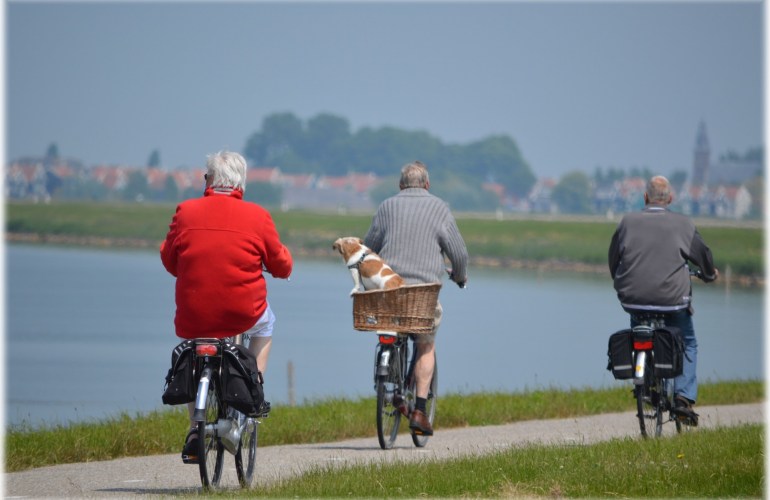
Rather than working out in gyms or running marathons, people in Blue Zones live in environments that require them to move throughout the day. This could mean tending a garden or walking up a hill to get to the store or wherever else they may need to go. While I definitely support pushing your fitness if that is something you enjoy, the bottom line is that everyone needs to move their body in some way regularly. And getting your exercise in natural ways not only helps avoid pushing yourself too hard and injuring yourself, but also has several other benefits. Something like gardening can help you appreciate the work that goes into feeding people. Walking in a natural setting can help you appreciate the beauty of nature, or walking in an urban setting can help you appreciate urban design and how well, or not well in many cases, our cities are designed for getting around by walking.
2. Know Your Purpose
I’d liken this to a personal vision, which I have mentioned several times. Having a purpose or, more simply, a reason to wake up in the morning is not only good for your happiness, but also allows you to make the best use of what you have. Flourishing is about using what you have in the best way possible, and you can’t do that if you’re just letting yourself be carried along by how things have always been done.
3. Down Shift
This refers to creating time for reflection and/or stress relief into everyday life. This could be meditation, prayer, writing, exercise, or whatever else works for you to take a break from the constant influx of information we experience in our lives. Stress relief is vital, but down time is also necessary for you to figure out your purpose, take stock of progress and what’s working and what’s not and just give your brain a break. Prioritizing down time like this can help you figure out what you should do to improve your life and the world around you.
4. 80% Rule
This refers to eating until you’re only 80% full, which helps you maintain a healthy weight, but can also be valuable as a general philosophy. People in developed countries, especially the US, tend to overdo things. To eat and drink and consume to excess, to the point that it’s no longer enjoyable. This is not only bad for our health but also because of all of the resources that go into feeding our extreme appetites as well as the pollution created in the process. Practicing restraint can help you find that line between satisfaction and glut, which will allow you to live more in that satisfied zone and less in the “I’m so full it’s uncomfortable” zone.
5. Plant Slant
Eating less meat is probably the most impactful thing you can do to reduce your environmental footprint because meat production is resource intensive, takes up a lot of land, and creates a lot of waste. Eating less meat also happens to be generally better for your health. In the Blue Zones, meat is only eaten on an average of five times a month in servings about the size of a deck of playing cards. The majority of protein in the Blue Zone diets comes from beans and legumes. Food is personal and cultural, and I’m not going to say that you have to be a vegan or vegetarian if that diet doesn’t appeal to you, but you should probably be eating less meat, especially if you’re an American.
6. Wine @5
People in all but one of the Blue Zones drink moderately and regularly, but, importantly, they do so with friends and/or food. This has a couple of parallels with flourishing. 1) It’s important to enjoy life, whether that means drinking a glass of wine or eating a piece of cake. Completely eliminating things you don’t like because they’re not good for you is not a good way to go. Of course the exception is if you’re an alcoholic or have some other addiction, but that should go without saying, and even then you can find little pleasures that help you enjoy life. 2) Drinking in these communities helps build social bonds, it’s not a form of escape. We need strong social bonds to create a flourishing society, and alcohol has helped in this way for centuries.
7. Belong
This refers to having a faith-based community, although I think the more important part of this trait is having faith or belief. This doesn’t necessarily have to be religion or a belief in God, it can even be a sense of wonder at how big and crazy the universe is. Belief that there are things greater than we are gives us perspective. It can show you both how little and how much power you have. It can show you that ultimately we’re all in this together and doing good for others is good for you too.
8. Loved Ones First
This is about having strong inter-generational family bonds. Loving other people at different stages in life can help pass along wisdom, but it can also teach us empathy. You may not understand or agree with why your father or your kid does something, but by treating them with love and trying to understand you can gain perspective on what it’s like to be in different stages of life. And while I think there is definitely some value in genetic families and interacting with people you may not have chosen to interact with otherwise, I also believe that families don’t have to be genetic. The important part of family is the idea of unconditional love. And that goes both ways: a group of people that you can turn to no matter what, as well as a group of people that you accept and help no matter what.
9. Right Tribe
The Blue Zone communities all have social structures that support healthy habits. I’ve already written about the importance of community for behavior change. In short, humans are social creatures and behaviors are contagious, therefore being around healthy people will make it easier for you to be healthy and being around unhealthy people will make it easier for you to be unhealthy. While you want to spend most of your time with a healthy group, this doesn’t mean you have to shun someone who is unhealthy if you’re trying to live a healthier life. At the very least you can be an example of trying to do better for yourself and the world, and at the most you can be a positive influence by inviting them to join you in healthy, activities.
Shifting the focus from personal health to environmental health reveals the countless ways in which one contributes to the other. Frameworks like the Power 9 traits found in Blue Zones can help us better understand both what is good for our bodies and good for the world.
 Flourishing